
Madison County Criminal Court Cases
Madison County criminal court cases run through North Carolina Judicial District 35. Superior Court tries felonies after indictment. District Court handles misdemeanors, infractions, ordinance cases, and the first stages of felony matters. The elected Clerk of Superior Court keeps the public files for both divisions. Mars Hill, Marshall, and Hot Springs do not operate separate municipal courts, so a town citation or misdemeanor charge still enters the state District Court system in Madison County.
The court file begins with a criminal pleading and grows as hearings, motions, pleas, and rulings occur. It is the best source for what legally happened to each charge. A police report can explain the incident, while a booking record describes intake. Neither replaces the Madison County case file. Readers tracing an event from arrest through judgment can use the separate Madison County arrest lookup for the custody stage, then return to the clerk's record for the filed counts and outcome.
Case location also controls where the supporting paper sits. The Madison clerk holds public filings and provides the terminals used for a free search. The district attorney controls the prosecution file, which is not the same as the clerk's public case file. Police reports stay with the agency that made them. A request framed only as “everything about the case” can therefore miss the correct custodian. Start with the docket, identify the document by name and date, and then ask the office that created or filed it.
Madison Court Divisions Explained
The label on a Madison County court record matters. A felony may start with a District Court appearance before a grand jury indictment moves the case to Superior Court. A misdemeanor can be resolved in District Court. The magistrate handles warrants, initial appearances, and release conditions, but the magistrate is not a separate trial court. This path explains why a single event may show entries tied to more than one judicial function.
- Indictment
- A grand jury's formal felony accusation.
- Arraignment
- The stage when charges are addressed and a plea may be entered.
- Disposition
- The result of a count, such as conviction, dismissal, or not guilty.
- Calendar
- A schedule of hearings, not proof of a final result.
Madison County is also in Prosecutorial District 35. The district attorney reviews charges and prosecutes the state's case. That review can change an intake charge before judgment, so the current court count deserves more weight than an early booking label.
District and Superior Court entries can describe different steps in the same felony path. The first appearance and probable-cause stage do not amount to a felony trial judgment. If Portal shows activity in District Court and later activity in Superior Court, compare the file numbers, dates, and charge text before linking them. For a misdemeanor, District Court may contain the plea, trial, and sentence. This court-level distinction is one reason a simple name result needs a full docket review.
Searching Madison County Case Records
The North Carolina eCourts Portal provides the first online route for Madison County criminal case records. Search broadly only when needed. A county filter, case number, and known event dates reduce the risk of joining two people with the same name. Portal shows public case information, but the Judicial Branch does not recommend it as a certified background-check product.
- Open Portal Smart Search and enter a person, business, or case number.
- Select Madison County and narrow the result to criminal case types.
- Compare the case number, filed date, offense date, and counts before accepting a match.
- Read each count and docket event separately. A dismissal on one count does not resolve another.
- Call the Madison clerk for documents that are not online, then request a plain or certified copy.
| Field Label | Type | Required | Notes |
|---|---|---|---|
| Search Criteria | Text | Yes | Person or business name, or case number |
| Advanced Filters | Expandable | No | Narrow same-name results |
| County | Dropdown | No | Select Madison for a local review |
| Case Category | Filter | No | Choose criminal when exposed |
| Filed Date Range | Date | No | Useful for a known event period |
The Judicial Branch eCourts overview confirms that all North Carolina counties use the system. Portal controls may evolve, so rely on the live labels while keeping the same verification steps.
A search can also begin with an attorney or citation number when the official help route exposes those choices. Use a date range when the reader knows the event period but not the case number. If too many results remain, do not guess from the first row. Narrow to Madison County and criminal cases, then compare the offense and filing dates. A portal document link may be absent even though the clerk can provide the public paper or electronic item.
Madison Court Files Off Screen
Online absence is not proof that no Madison County criminal case exists. Older material, documents that are not published, and records awaiting migration may require clerk review. Public terminals at any clerk's office can search statewide or by county for free. Madison paper files are inspected through the Madison clerk at the temporary court site, 258 Carolina Lane, Marshall, NC 28753. Call (828) 649-2200 before travel to confirm access and ask whether the needed item is paper or electronic.
The court-record access instructions explain that public files may be viewed at the clerk and that copies can be requested. Printing may cost extra. Ask whether a plain copy is enough or whether a certified copy is needed for the reader's own purpose, and request a cost estimate before a large order.
The official eCourts page is shown in the captured source below. It helps readers recognize the statewide route used for Madison County cases.
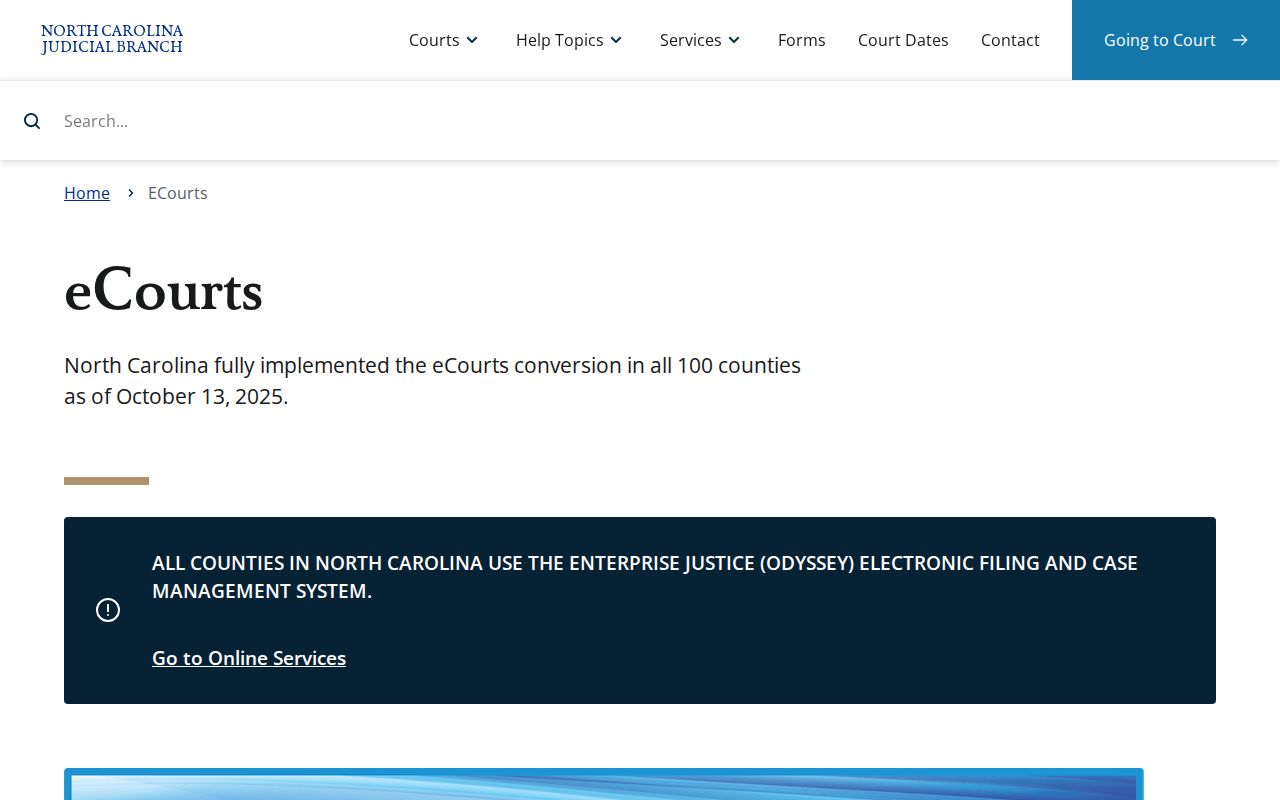
The image connects Madison searches to the official Judicial Branch system, while the local clerk remains the document custodian.
Before visiting, write down the case number and exact document sought. Ask whether the file is available at the temporary site and whether the public terminal, staff copy service, or paper jacket is the right route. This saves a broad search at the counter and gives the clerk enough detail to locate the Madison record. Court staff can explain access and copy procedure, but they cannot interpret the legal effect of a plea, order, or sentence for the requester.
Inside a Madison County Case File
A Madison County case file records the court's chronology. It can identify the filed offense, lawyers, hearings, plea, disposition, judgment, sentence, costs, and bond information when those items are public and entered. Documents may remain at the clerk even when Portal shows only docket events. Review each count because one case can contain several charges with different results.
| Case Number and Court | County, division, case type, filing date, and status |
|---|---|
| Charges and Counts | Offense description, statute, level, and dates for each count |
| Parties and Counsel | Party roles, defense counsel, and prosecuting attorney when entered |
| Docket Events | Hearings, filings, scheduled dates, and courtroom data when public |
| Disposition and Plea | The separate outcome and plea for each count |
| Judgment and Sentence | Sentence, conditions, and monetary obligations when available |
A “disposed” label means an outcome was entered. It does not mean convicted. Likewise, a court calendar points to a scheduled event rather than a judgment. These distinctions are vital when a Madison County docket contains amended or dismissed counts.
Bond and warrant events need the same care. A public docket may display bond conditions, an amount, or an order-for-arrest event when those data are entered. Their absence does not prove that no current process exists. For an active concern, use the clerk or magistrate routing documented for Madison County. The case file is a historical and procedural record, not a guaranteed live warrant database. Sealed process and protected matters also will not appear like an ordinary open docket.
Certified Madison Court Record Search
A person who needs a certified Madison County name search should use Form AOC-CR-314 through the Clerk of Superior Court. The fee is $25, and the result covers Madison County rather than the full SBI fingerprint repository. Mail submissions accept a money order or certified check, not a personal check. In-person payment may be made by credit card, cash, money order, or certified check.
The Judicial Branch criminal background-check page sets out this clerk route and also notes the free terminal option. Portal printouts are not a substitute for a certified clerk search. For a person's own statewide fingerprint-linked North Carolina record, the separate SBI Right to Review process is the right channel.
The official instructions for obtaining records appear in the source capture below.
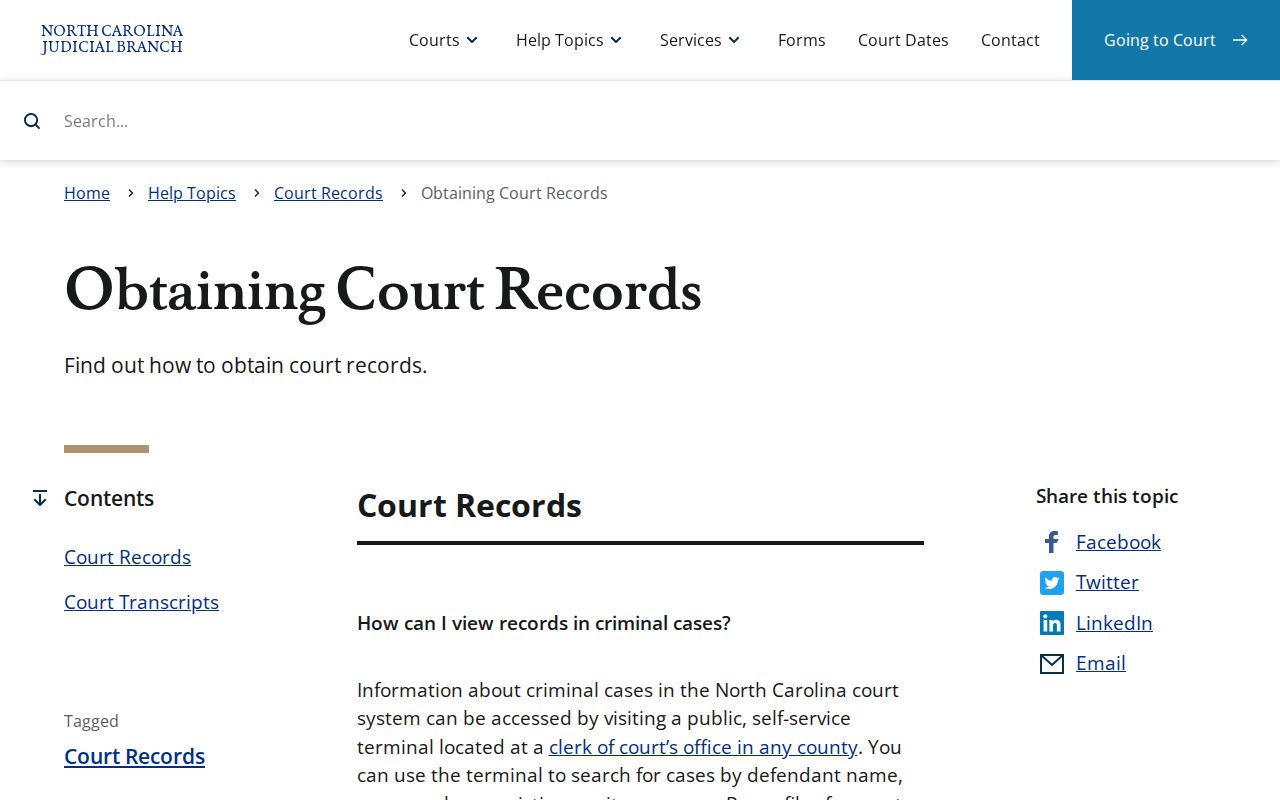
This source confirms why clerk access remains part of a complete Madison County case search.
A certified county search and an SBI Right to Review answer different questions. The clerk searches Madison court records by name and certifies the county result. SBI uses fingerprints to return the subject's North Carolina repository history, including arrest cycles and associated dispositions when available. Neither method supplies a nationwide court-file set. A person reviewing their own record may need both when identity accuracy and the detail of a Madison case matter.
Form AOC-CR-314 should carry the name details needed for the clerk's search and should be sent with the accepted payment. A mailed personal check is not accepted. The clerk result is useful when a certified statement of the Madison search is needed, while a free public-terminal review suits initial research. If the name is common, ask what identifiers can be used without placing unnecessary private data in open correspondence. Keep the receipt and certified result with the date of search because a later filing can change the record.
How a Criminal Case Moves
A Madison County case can begin with a complaint, warrant, arrest, or summons. A magistrate handles the first appearance and release decision. District Court conducts misdemeanor proceedings and early felony stages. Prosecutor review may revise the charge. A felony that proceeds on indictment moves into Superior Court for arraignment, pretrial work, plea or trial, and judgment. Appeals follow the rules that apply to the court and result.
Case flow: Charges Filed › Arraignment › Pretrial › Plea or Trial › Disposition › Sentencing
This flow is not a promise of timing. The docket and current calendar show the recorded stage, but a calendar alone cannot prove what happened at a hearing. Confirm the next event and final outcome with the clerk when the Portal entry is unclear.
Felony screening shows why the first charge can differ from the last. An officer or complainant may start the process, a magistrate handles the early judicial step, and the prosecutor reviews what should proceed. An indictment is the grand jury's formal accusation; it is not a conviction. The plea or trial resolves the count, and the judgment records the sentence. Reading those stages in order prevents an early allegation from being stated as the final result.
Reading Madison Counts and Outcomes
One Madison County file may list several counts. Treat each as its own track. The plea, disposition date, and judgment can differ across counts, and an arrest description may not match the charge that the prosecutor ultimately filed. “Dismissal” means a count ended without conviction. It does not by itself erase the public file. “Not guilty” is an acquittal, while “conviction” follows a guilty plea or finding.
Names alone are weak identifiers. Check the case number, county, filing date, offense date, and public case details. A common-name result that lacks a matching date should not be treated as the same person. The court record also may pair an order-for-arrest event with a case, but Portal is not guaranteed to be a live warrant confirmation service.
Note: A dismissed count can stay visible until a qualifying automatic or petition-based expunction has been carried out by the responsible agencies.
Expunction is distinct from sealing a single display field. North Carolina uses outcome-specific statutes, and qualifying relief is filed in the county of conviction. For a Madison conviction, the current AOC petition that fits the statute goes to the Madison clerk. An order must then reach the agencies that hold copies. After implementation, a person reviewing their own record can recheck Portal, obtain a fresh clerk result, and order a new SBI Right to Review when fingerprint history is involved. Until that process applies and is carried out, a dismissal can remain part of the accessible case history.
Madison District 35 Contacts
Different questions go to different District 35 offices. The Madison clerk handles files, public terminals, copies, and court sessions at 258 Carolina Lane. Call (828) 649-2200 for clerk access. Magistrates can route questions about warrants, initial appearances, and release process at (828) 649-2442. The District Attorney's Madison line is (828) 649-2240, while the regional Superior Court Judges office is (828) 737-6747 and the District Court Judges office is (828) 737-6712.
Madison County Clerk
258 Carolina Lane
Marshall, NC 28753
(828) 649-2200
The official Madison County court directory should be checked before calling a regional office. Its captured page appears below.
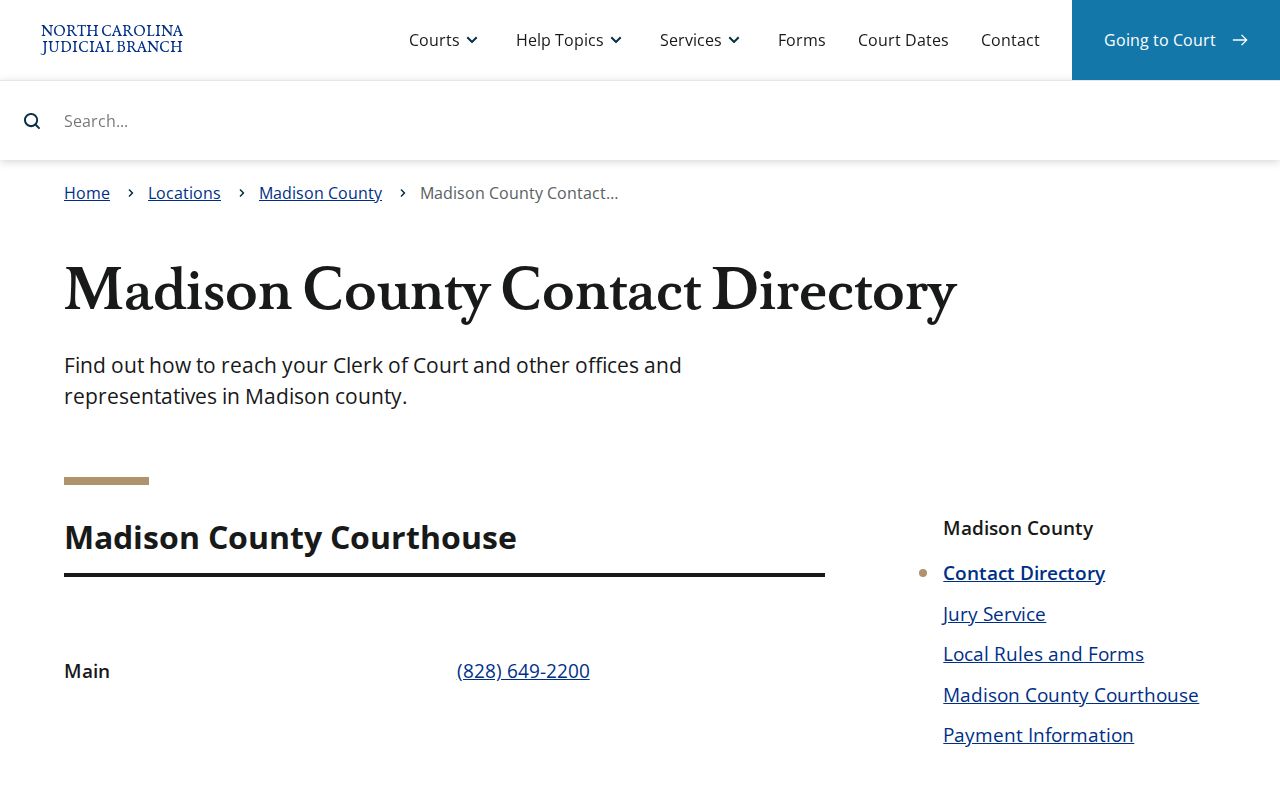
The directory keeps the clerk, judges, prosecutor, and magistrate roles distinct for Madison County record questions.
The office list is also a routing aid, not a menu for sending the same request everywhere. File and copy questions go to the clerk. Charging questions arise in the prosecutor's role, though staff cannot give personal legal advice. Magistrate contacts fit the early warrant, initial appearance, and release process. Judge offices are not substitute records counters. Naming the case number and the exact procedural question helps District 35 staff send a caller to the right place without disclosing information that is sealed or otherwise protected.
Case Record Access & Restrictions
G.S. 7A-109 directs clerks to keep court records open for public inspection unless another law seals or makes them confidential. That rule supports access to ordinary Madison County dockets and files. It does not open juvenile matters, sealed or expunged cases, protected victim or minor data, Social Security numbers, account numbers, or confidential investigative material.
An online view can be narrower than the public clerk file. Ask the clerk about a missing Madison County case rather than assuming it never existed. The clerk can explain inspection and copy options but cannot supply legal advice. A custodian also need not create a new compilation merely because a requester asks for one.
Redaction and closure are not the same. A clerk may provide a public document with protected identifiers removed, while a sealed or expunged case may be unavailable through ordinary access. Juvenile matters follow confidential rules. Police investigative material does not become an open court exhibit merely because an arrest led to a case. Ask for a named filed document, and let the Madison custodian apply the law to that item. This narrower request also makes it easier to understand what was withheld and why.
Chapter 132 governs many agency records, but court-file inspection rests on the Judicial Branch rules and G.S. 7A-109. That split matters when one event produces both a police narrative and a docket. The clerk can provide the public pleading and judgment; the arresting agency decides access to its report under the rules for criminal investigations. A copy from one office does not imply that the other office must release its full file. Track the source of each fact so a court disposition is not confused with an officer's early allegation.
Federal criminal cases are a separate system. The PACER service holds federal dockets, including matters in the Western District of North Carolina, and does not feed those cases into Madison's state eCourts results.
The PACER source capture makes that boundary clear for a reader whose Madison-related search crosses into federal court.
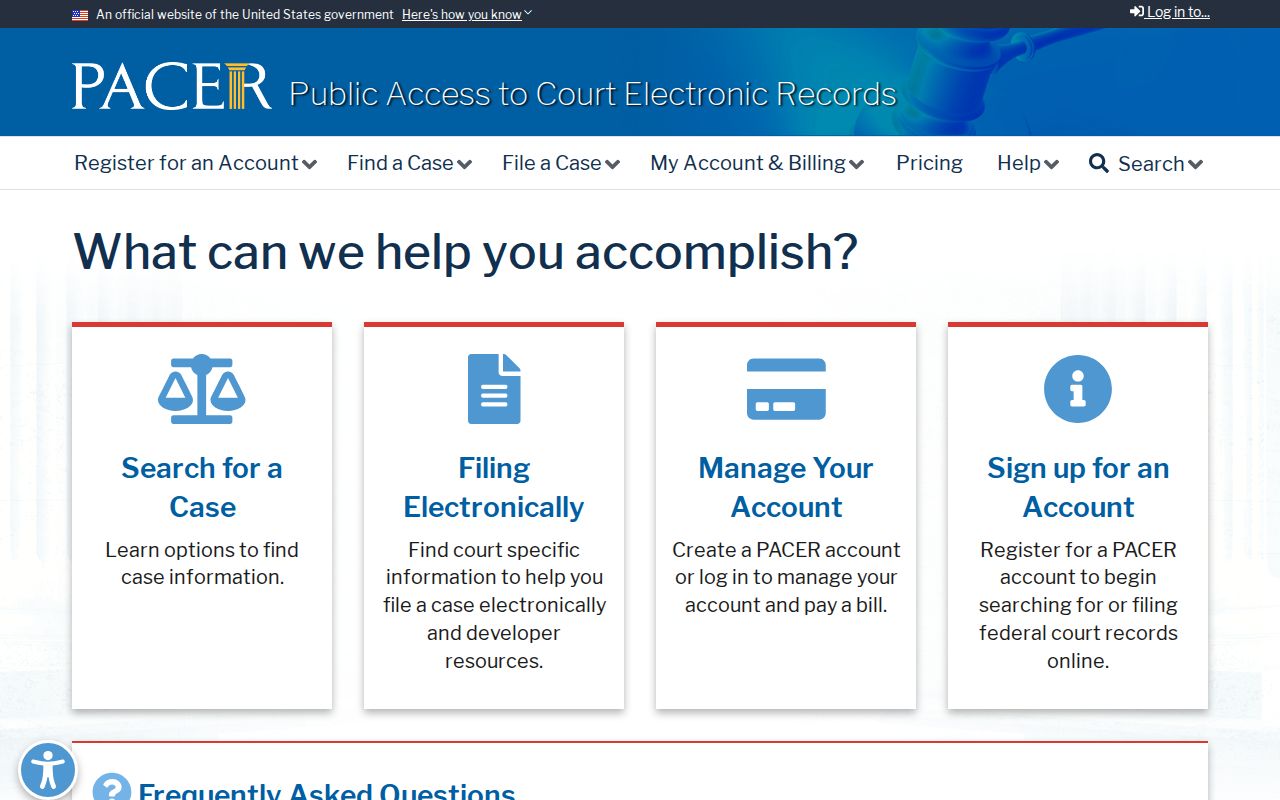
Use PACER only for federal records and the Madison clerk or eCourts for North Carolina state cases.
State and federal searches should never be merged solely because the same name appears in both. PACER requires an account and follows the current federal billing rules, while eCourts supplies public North Carolina case information. The Western District of North Carolina site lists its current divisional locations and clerk contacts. Confirm the correct federal division before planning a visit. A federal prison record, if relevant, belongs in the Bureau of Prisons locator rather than NCDAC, just as a Madison County jail entry belongs with the sheriff rather than either prison system.