
Madison County Arrest History
Madison County arrest records can begin with the sheriff, Mars Hill Police, Marshall Police, Hot Springs Police, the North Carolina State Highway Patrol, or another agency with authority. The arresting agency keeps its report. If a person is taken to the county detention function, the sheriff creates a separate booking file at the public-safety complex. A resulting criminal pleading then creates a court file. These records overlap, but each answers a different question.
An arrest entry shows that an agency took action based on an allegation and legal process. It does not establish guilt. The booking charge can predate the prosecutor's review and may later change. For that reason, a sound Madison County arrest lookup follows the event into eCourts and reads the final disposition rather than stopping at intake.
Which Madison Agency Made the Arrest
Custody and incident records can have different owners. Ask the Madison County Sheriff for sheriff arrests and county booking data. Mars Hill Police records are requested from the department at 280 North Main Street, (828) 689-2301. Marshall Police works from its temporary office at 10 Derringer Drive and can be reached at (828) 649-2111. Hot Springs Police handles town matters through the Community Center at 43 North Andrews Avenue, (828) 622-3214.
A Mars Hill officer's report does not become a sheriff report merely because detention staff booked the person. Request the incident record from the police department and booking material from the sheriff. Highway enforcement and crash records should be routed through the State Highway Patrol's official channels. This two-custodian pattern prevents a partial response from being mistaken for the whole Madison County arrest record.
Hot Springs cases can involve shared public-safety work with the sheriff, and Mars Hill University public safety may create a campus record before a criminal case reaches county systems. Ask who took the report, who made the arrest, and where booking occurred. Those three answers may name more than one office. Give each custodian the event date, place, and known number. A town report can contain the incident narrative, the sheriff booking can show custody, and the Madison clerk can show whether a prosecutor filed a charge and how the court resolved it.
Looking Up Madison County Arrests
No official Madison County public inmate roster or daily booking database was located. Start with the sheriff by phone for current custody and nonconfidential bond information, then use the written process for a record copy. The later court and state routes answer different questions and should not be treated as substitutes for current county custody.
- Call the Madison County Sheriff at (828) 649-2721 to ask whether the person is in current county custody and what nonconfidential release or bond data is available.
- Identify the arresting agency and request its incident or arrest report directly. Use dates, place, and an incident number when known.
- Submit the sheriff's written request for releasable booking material when a phone answer is not enough. Telephone requests do not count as formal sheriff records requests.
- Search North Carolina eCourts Portal for the resulting Madison case, then confirm the filed counts and later disposition with the clerk.
- For one's own statewide fingerprint record, use SBI Right to Review. If custody later moves to prison or state supervision, use the NCDAC public offender search.
The state repository can have gaps when no qualifying fingerprint card was submitted or a disposition has not matched. A missing entry is not proof that a local event did not occur.
For recent events, allow time for the handoff from officer to detention, magistrate, and clerk. A same-day eCourts search may return nothing even when detention staff can confirm current custody. Later, a court file may use a charge description that differs from the intake label. Save the case number once it appears. That number is more useful than a broad name search for following hearings, plea, disposition, and judgment. If no case appears after a reasonable interval, call the clerk rather than assuming the arrest was erased.
Madison Sheriff Arrest Record Requests
The sheriff uses a specific written policy. Mail or deliver a request to Madison County Sheriff, Attn: Ashlynn Quintero, Public Records Requests, 348 Medical Park Drive, Marshall, NC 28753. Email requests go to mcsopublicrecordsrequest@madisoncountync.gov. The policy says telephone requests are not accepted for tracked records work, and a request is filed when the designated custodian confirms receipt.
Madison County Sheriff
348 Medical Park Drive
Marshall, NC 28753
(828) 649-2721
mcsopublicrecordsrequest@madisoncountync.gov
Describe the record, relevant names, dates, place, and incident, booking, or case number. State the desired format. Inspection has no located fee, while copies may carry actual cost. An extensive request may draw a special service charge after the office discusses an estimate.
The county public-record request page is shown in the source capture below.
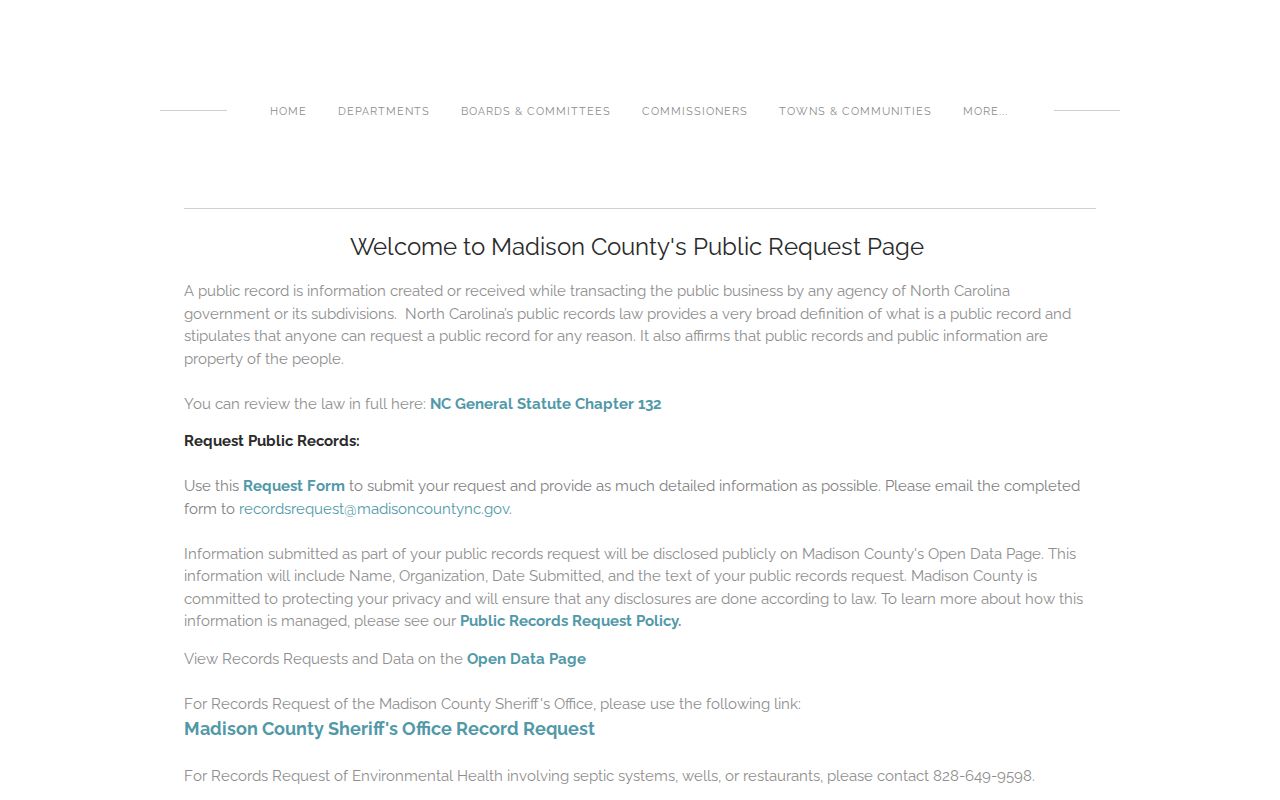
The image marks the official request route and its notice that submitted request details may appear on the county Open Data page.
The sheriff form asks for requester contact data, a detailed record description, relevant names and dates, a location, and any incident, booking, or case number. It also asks how the requester wants to receive the result and requires an acknowledgement. Avoid extra personal detail in the narrative because the county warns that the request text and requester information can be disclosed on its Open Data page. A focused description protects privacy, reduces staff search time, and makes it clearer which booking event or report the request seeks.
Inside a Madison County Arrest Record
The arresting agency can record the event number, time, place, officer, alleged offense, warrant basis, narrative, and property or evidence. The sheriff's detention staff then create intake data. Some internal fields, such as exact cell location, medical details, and security classification, need not be public. Ask for the specific releasable fields needed rather than demanding the entire investigative file.
| Booking Identifier | Intake number used to distinguish the custody event |
|---|---|
| Booking Date and Time | When detention staff processed the intake |
| Arresting Agency | The sheriff, town police, patrol, or other originating agency |
| Intake Charges | Alleged offenses recorded at booking, subject to later change |
| Bond or Conditions | Release terms set through the judicial process |
| Photograph and Fingerprints | Maintained during intake; no public Madison booking gallery was located |
| Custody or Release | Current status and authority such as bond, court order, or time served |
Verify a booking event with the case number and later court result. Internal intake fields should never be used to infer a conviction.
Madison Detention Intake and Release
After transport, detention staff search for contraband, secure property, complete forms, photograph and fingerprint as required, verify the process and charges, screen the person, set classification, and assign a cell. Staff maintain location counts and files until release. A magistrate decides initial release conditions under North Carolina procedure. Detention staff release a person only on bond, court order, time served, or another proper authority.
Booking flow: Arrest › Transport › Search and Property › Intake › Magistrate Review › Classification › Custody or Release
This sequence explains why the arrest report and booking file have different data. The officer describes the event; detention staff document custody. The court later controls the legal result.
Classification, medical screening, property control, and cell assignment are operational detention records. The public can ask for nonconfidential custody and bond facts, but should not expect every internal intake field. Before sending mail or funds, call the detention office because no official local vendor, address format, deposit method, or visitation schedule was found. Confirm the person's identifier and the current rule. Directing money through an unverified service risks delay and does not help establish whether the person remains in Madison County custody.
Booking Logs and Recent Arrests
No official daily Madison County arrest log, booking gallery, or public inmate roster was found. Do not mistake Marshall's officer activity database for a public blotter. It is described as an officer resource with forms and report entry. The working route is the sheriff's main line for current custody, followed by a specific written request for releasable booking details.
A current custody answer is only a snapshot. A person may have been released, transferred, or never booked at the county site. Search eCourts for a filed Madison County case after allowing time for intake and filing. The Judicial Branch records request page is another official route for judicial administrative records, though ordinary case documents still belong with the clerk.
The Judicial Branch request source appears below to help distinguish court access from sheriff booking access.
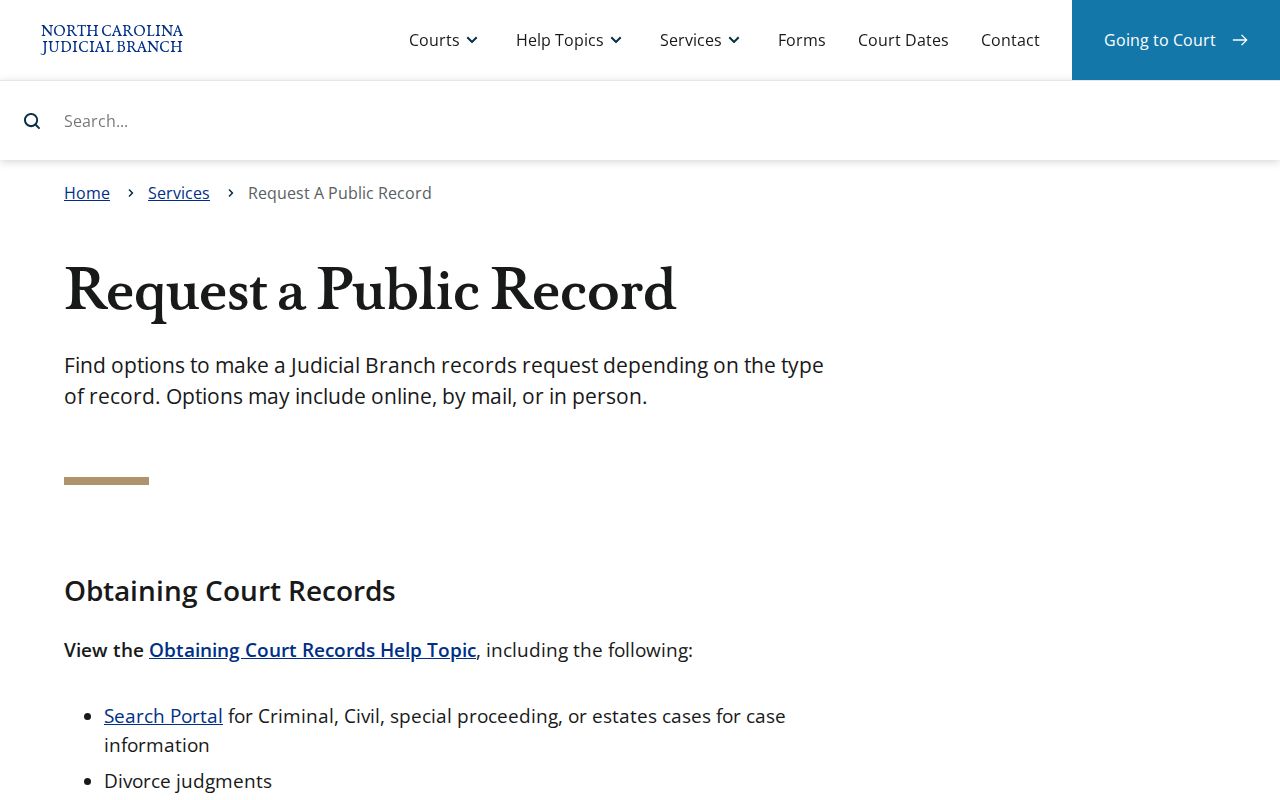
The source confirms that each Madison County custodian must receive the request for the records it actually holds.
Madison Arrest Facts and Investigative Files
North Carolina Public Records Law treats basic arrest information differently from a full investigative file. G.S. 132-1.4 addresses criminal investigation and intelligence records, while basic facts about the time, place, nature, charge, and circumstances can have a different access status. Juvenile records and protected victim or personal data may be withheld or redacted.
Body-worn and dashboard recordings follow the special process in G.S. 132-1.4A. They are not ordinary public records released merely by asking for a report. A request may involve consent, a disclosure decision, redaction, or a court process. The sheriff form includes a recording route, but no fixed local recording fee was found.
The official Chapter 132 source is captured below.
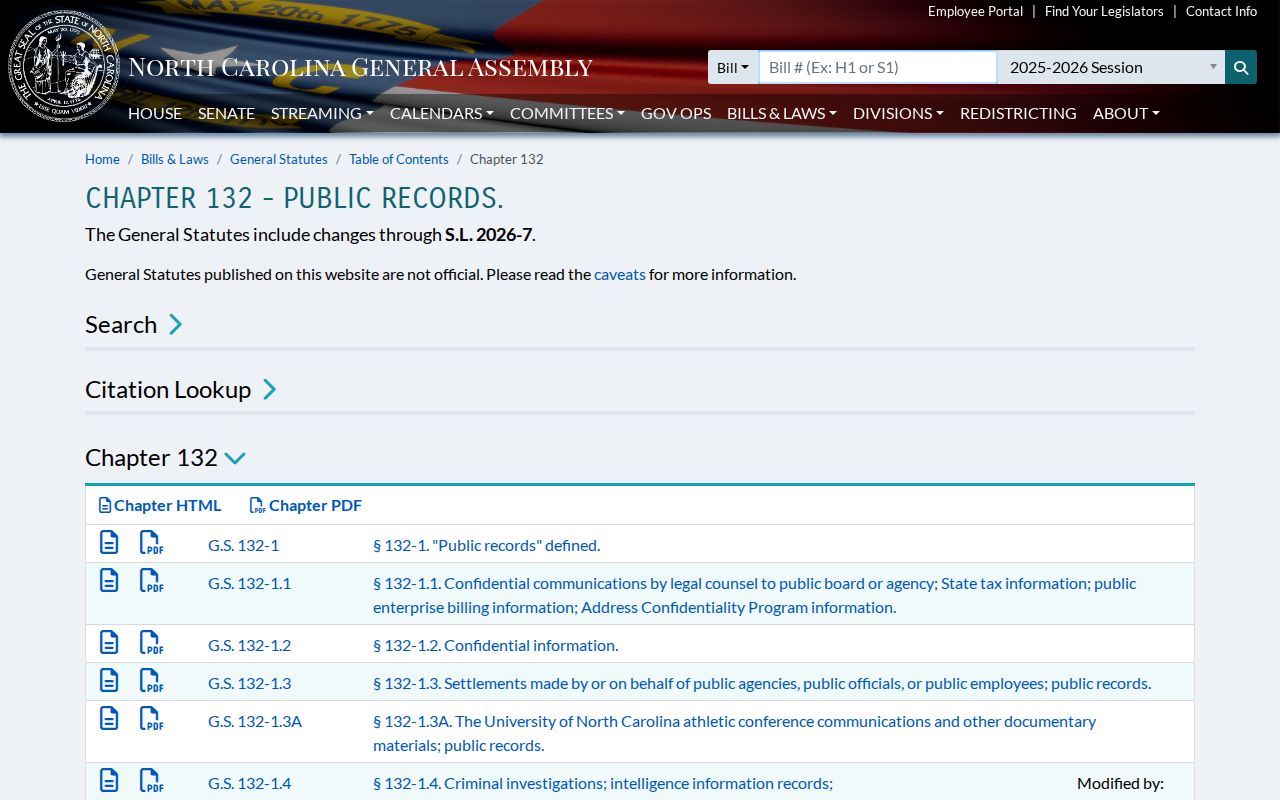
The statute source helps explain why a basic Madison arrest fact may be available while an investigative narrative or recording remains restricted.
A records request does not force an agency to write a new summary or answer questions that require analysis. Ask for an existing report, booking entry, or named recording. If an office redacts material, the public version may still provide the basic event data permitted by law. Recordings deserve their own request because G.S. 132-1.4A uses a disclosure and release framework. The process can require notice, consent, judicial review, or editing, depending on the facts and the type of access sought.
When Madison Custody Moves to NCDAC
The NCDAC Offender Public Information Search is the follow-on channel for a person sentenced to state prison or placed under state probation, parole, or post-release supervision. It is not a Madison County pretrial jail roster. A failed NCDAC search therefore says nothing conclusive about a recent local arrest.
Fingerprints from a qualifying arrest may be sent to the SBI Criminal Information and Identification Section. Courts report dispositions back so the arrest cycle can be paired with its outcome. SBI Right to Review is a mailed, $14 fingerprint process for the subject's own North Carolina record. It is not a public name-search portal, and its phrase “dispositions if available” reflects possible reporting and matching gaps.
Use each system at the right stage: sheriff for county custody, clerk and eCourts for the legal case, SBI for one's own fingerprint history, and NCDAC after state correction or supervision begins.
SBI and the clerk also differ in identity method and scope. SBI's personal review ties a fingerprint card to the subject's North Carolina repository file. The clerk's certified search uses a name and covers Madison County court records. NCDAC focuses on state correction and supervision. None is a complete substitute for the police report or the county booking file. A person checking their own history may need to compare all four and then ask the responsible agency to correct a mismatch with the source record.
Arrests Are Not Convictions
An arrest record and a conviction record are created at different stages by different custodians. The first shows that an arrest and perhaps a booking occurred. The second requires a guilty plea or finding and a court judgment. A dismissal, acquittal, or decision not to file can end the path without conviction. Read the Madison County criminal court case for the filed counts and final outcome.
| Arrest Record | Conviction Record |
|---|---|
| Created by arresting agency and detention staff | Created and entered by the court |
| Shows an arrest or booking event | Shows a guilty plea or finding and judgment |
| Held by police, sheriff, and booking system | Held by the clerk and reported to SBI |
| May lead to release, no filing, dismissal, or trial | May lead to sentence, appeal, or qualifying expunction |
Note: An arrest is not proof of guilt, and the intake charge may differ from the count that reaches final judgment.
For a qualifying dismissal, not-guilty result, or conviction, the correct expunction statute and current AOC form depend on the outcome. A Madison County petition files with the clerk because relief follows the county of conviction. After an order, implementation can involve the court, arresting agency, sheriff, and SBI repository. A reader checking their own record should keep the order, then verify each system again. If one source still shows the event, ask that custodian about its correction route rather than assuming every database updates at the same time.
The safest summary is also the simplest: booking proves custody, a filed charge proves an accusation reached court, and conviction requires a guilty plea or finding plus judgment. These stages can be linked by case and event numbers, but they should not be collapsed. Madison County records are most useful when their dates and custodians stay attached. That method respects dismissals and acquittals, catches amended charges, and gives the final court disposition its proper role.